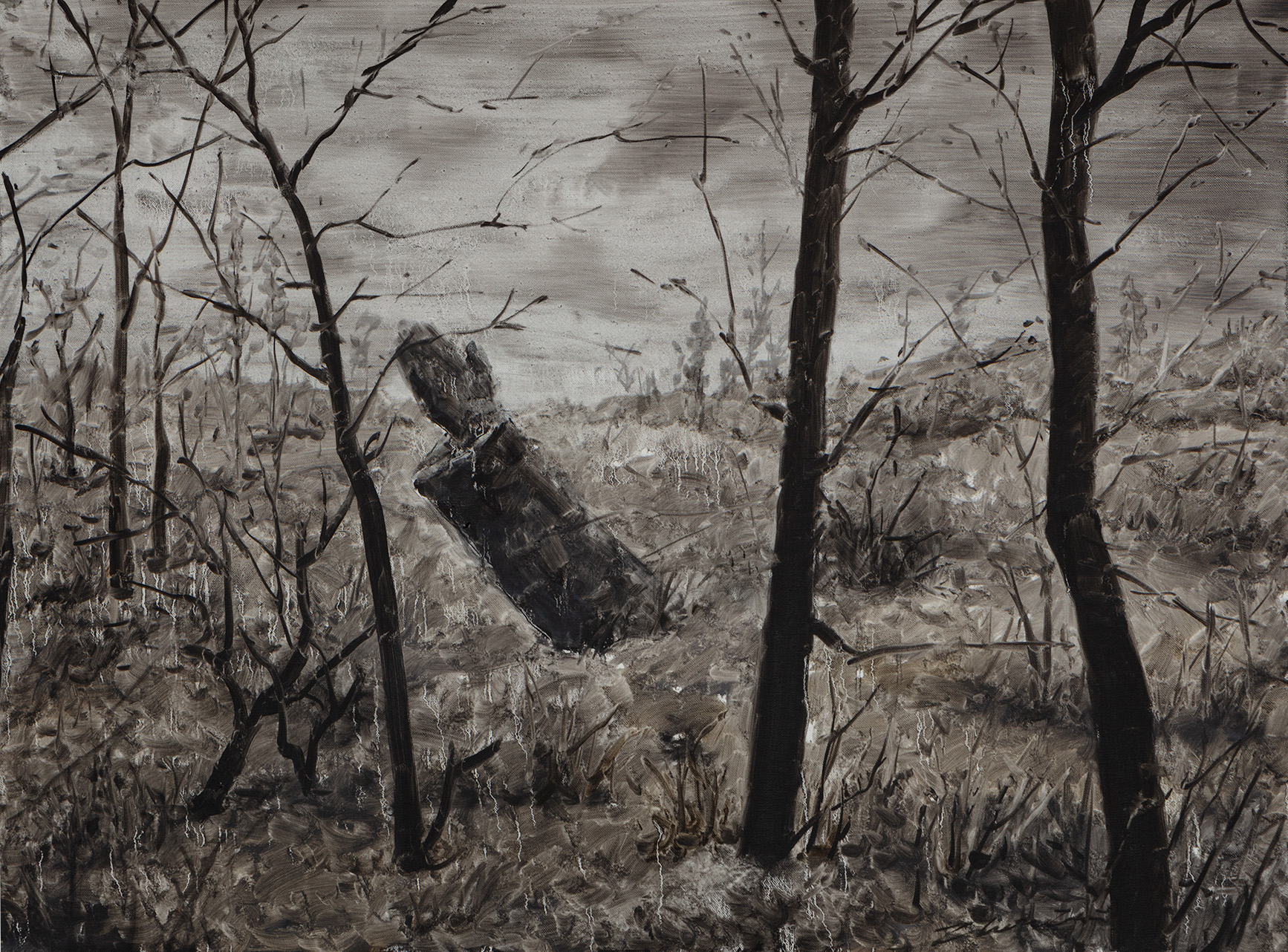
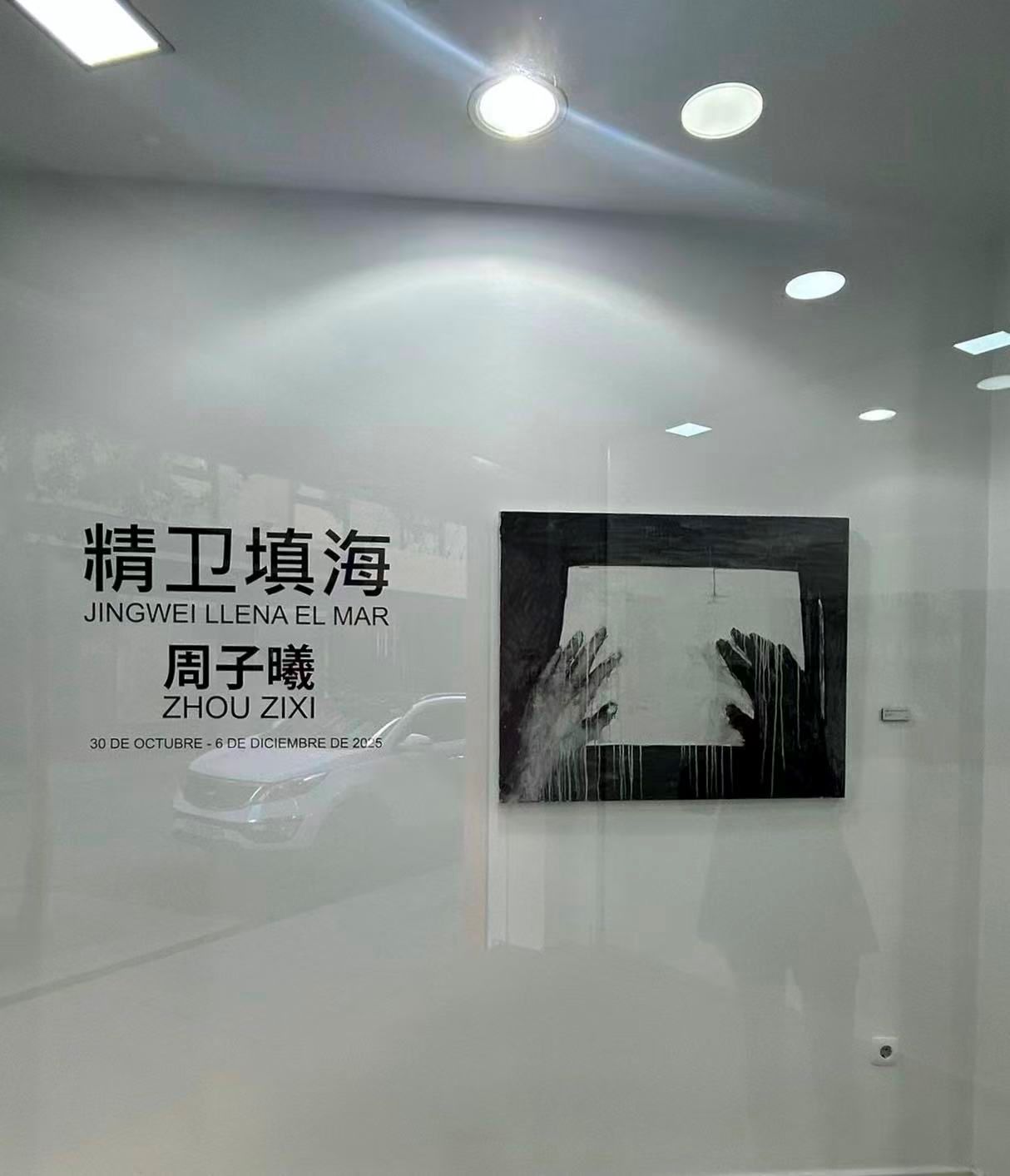
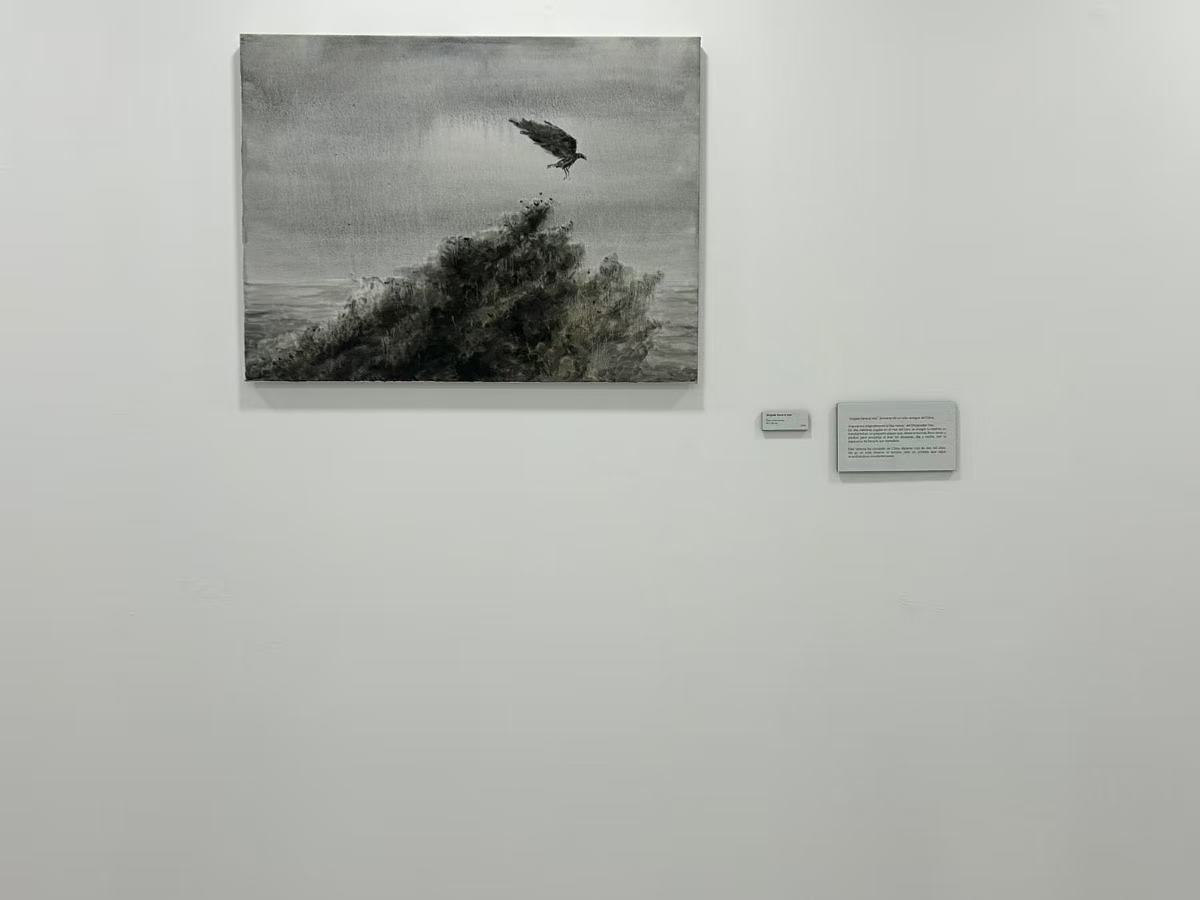
“Jingwei llena el mar” proviene de un mito antiguo de China. Jingwei era originalmente la hija menor del Emperador Yan. Un día, mientras jugaba en el mar del Este, se ahogó; su espíritu se transformó en un pequeño pájaro que, desde entonces, lleva ramas y piedras para arrojarlas al mar sin descanso, día y noche,con la esperanza de llenarlo por completo. Esta historia ha circulado en Chinadurante más de dos mil años. No es un mito muerto ni remoto, sino un símbolo que sigue re-activándose constantemente.
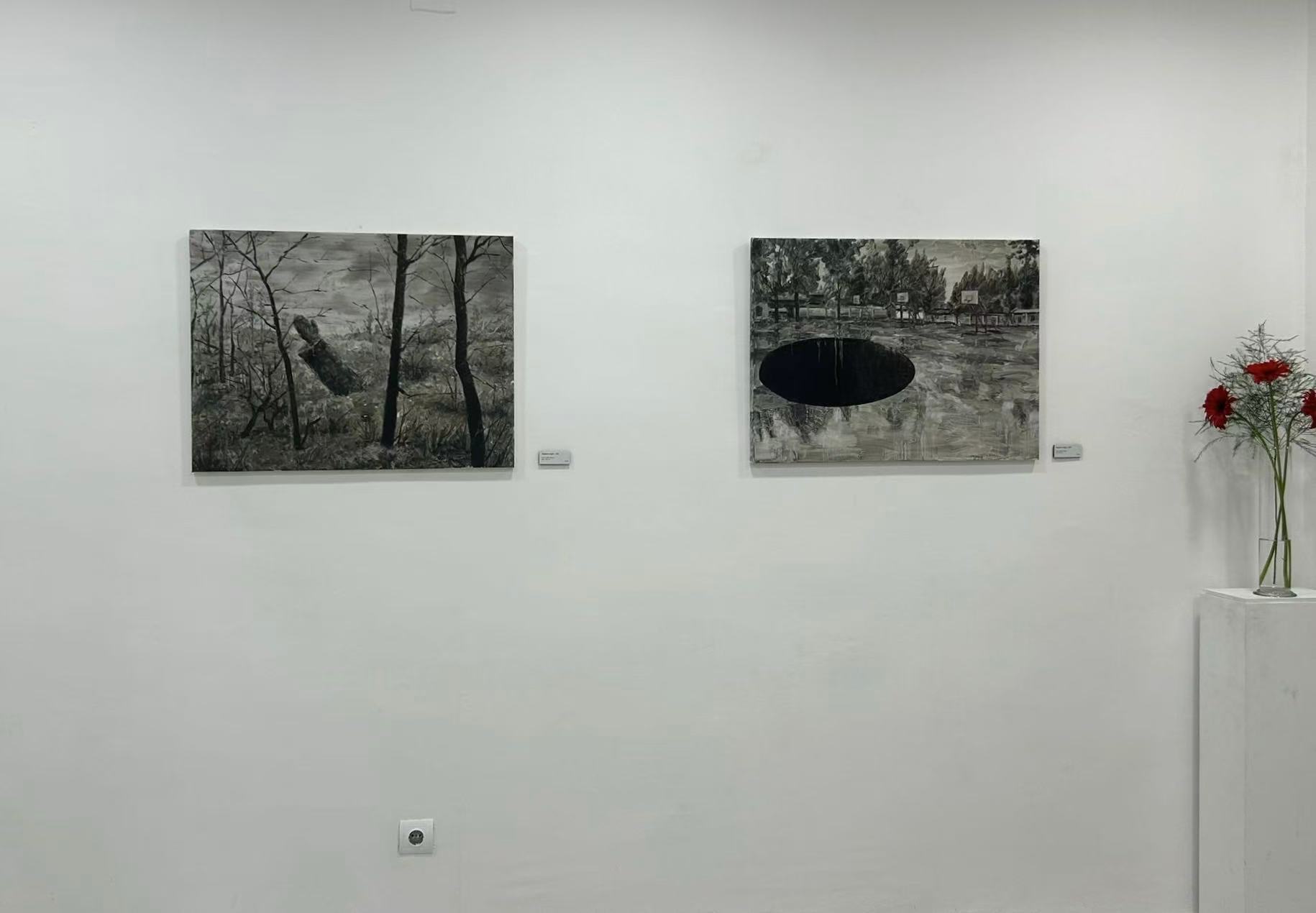
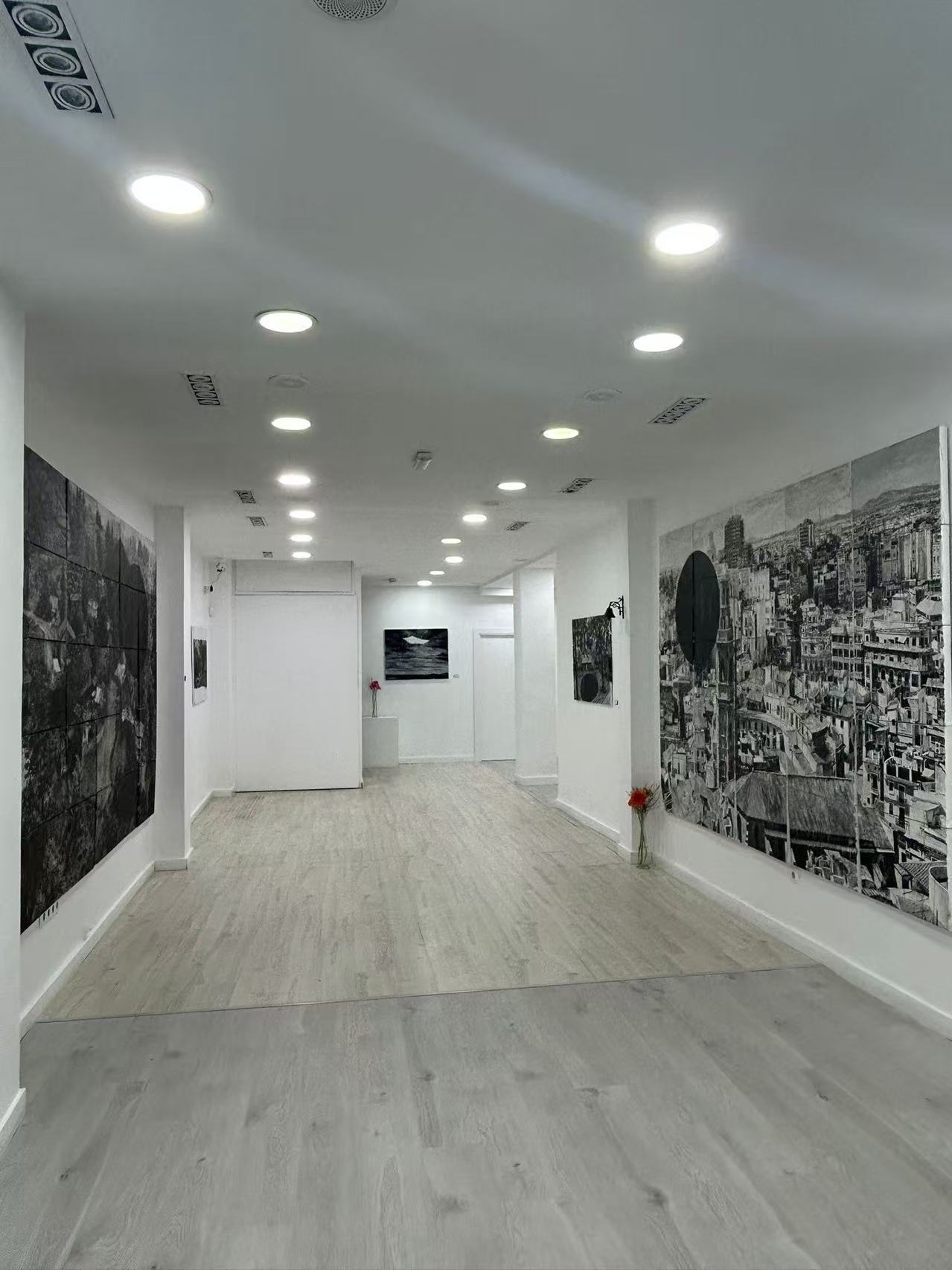
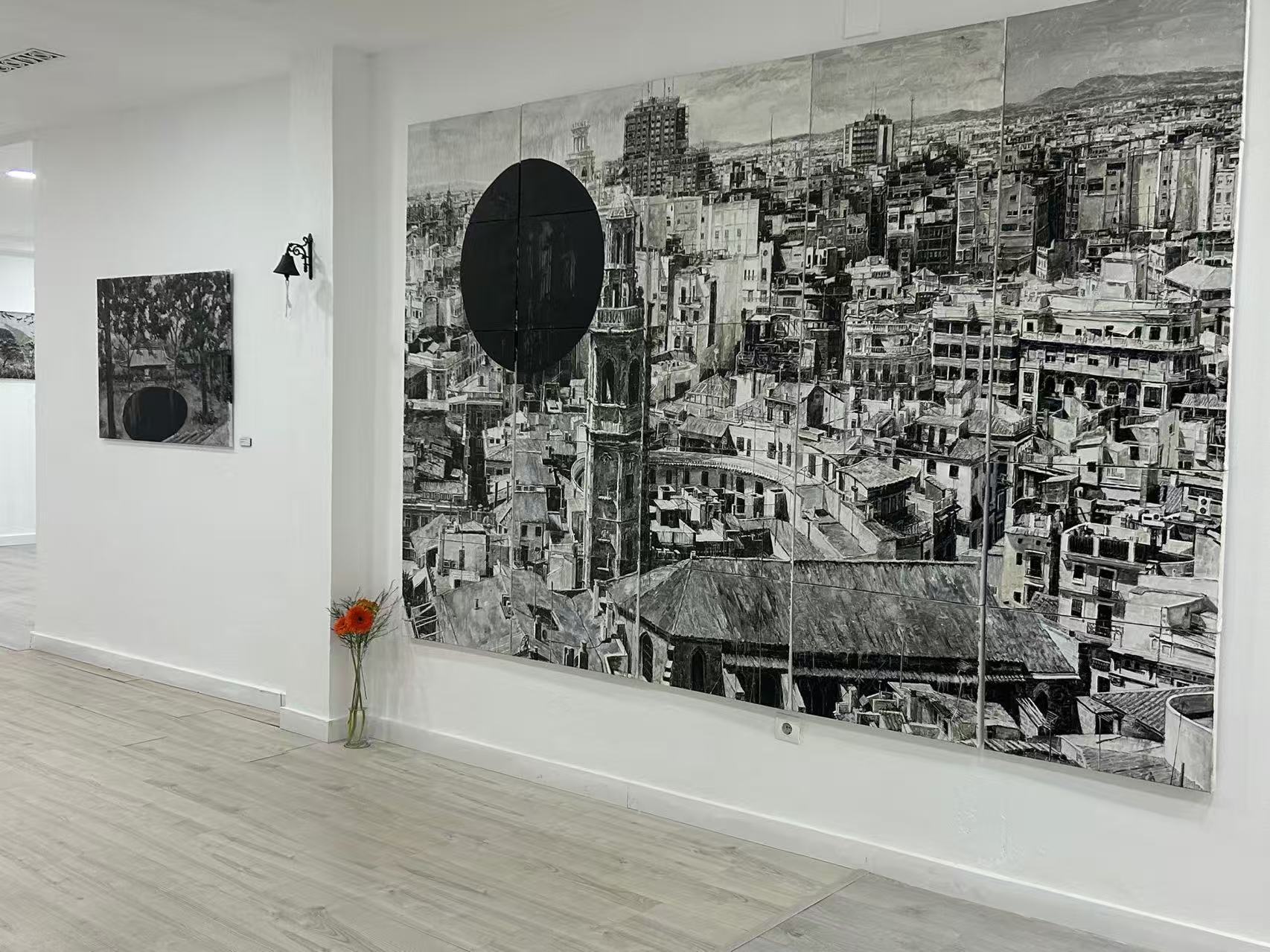
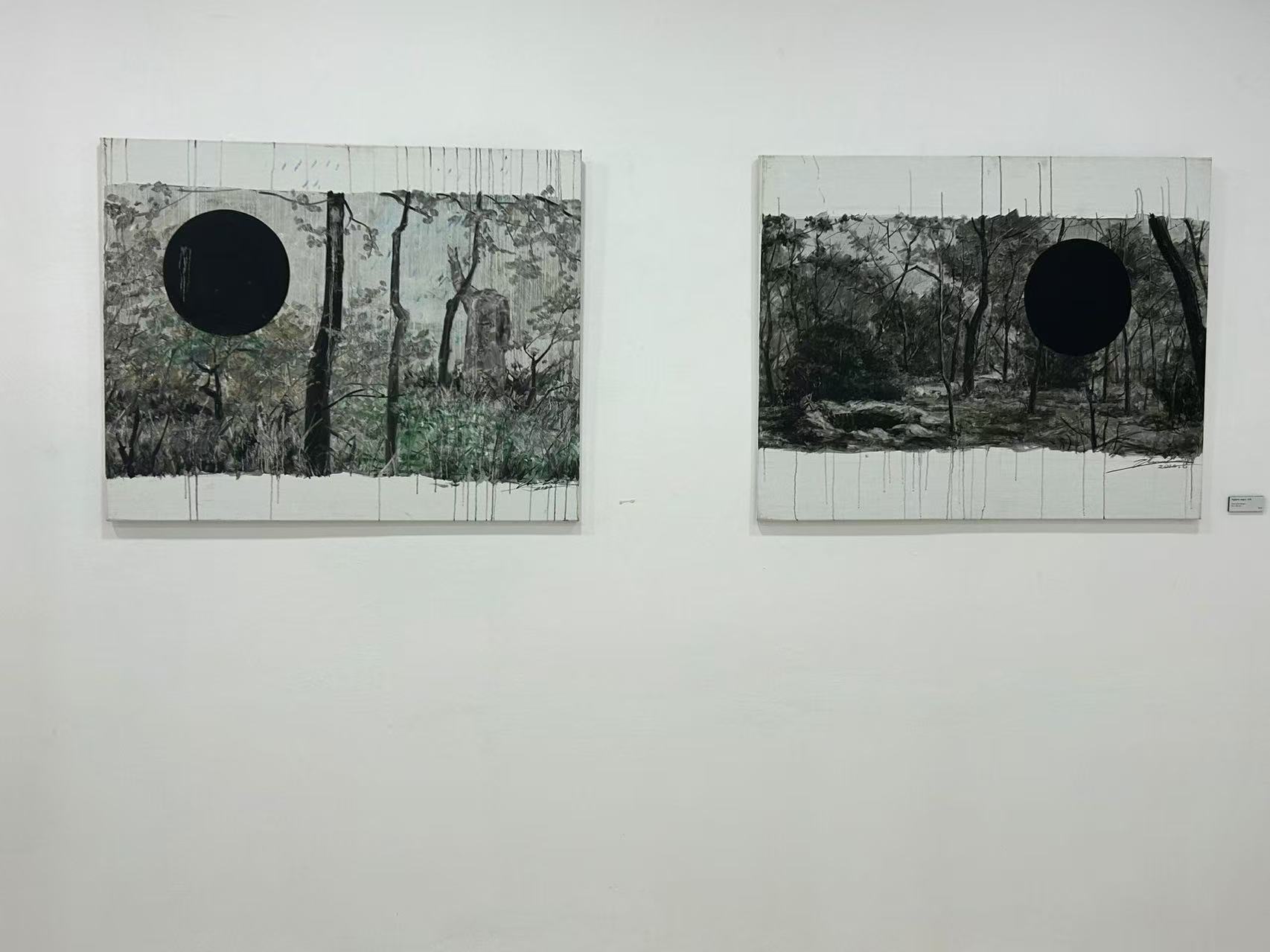
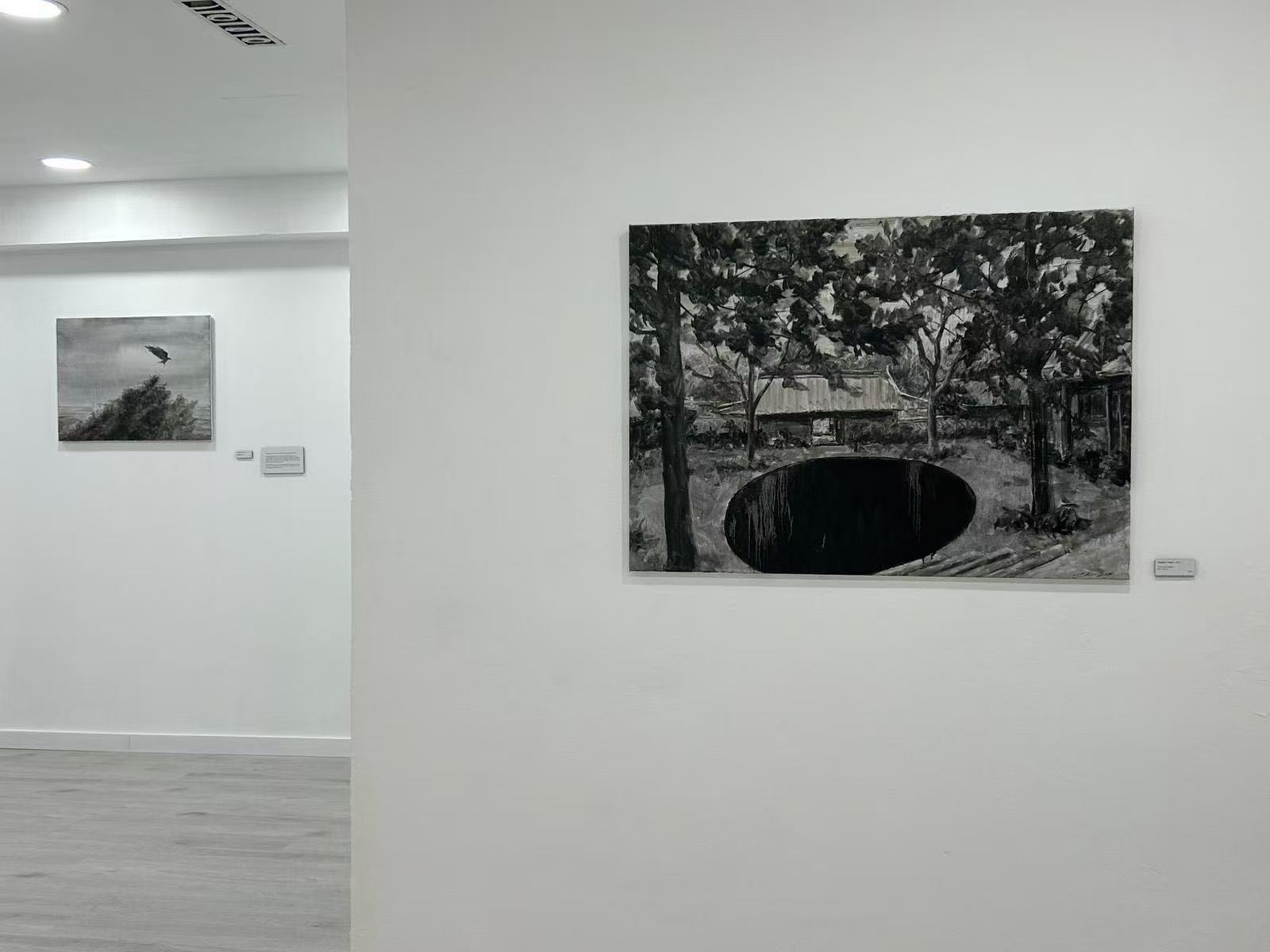
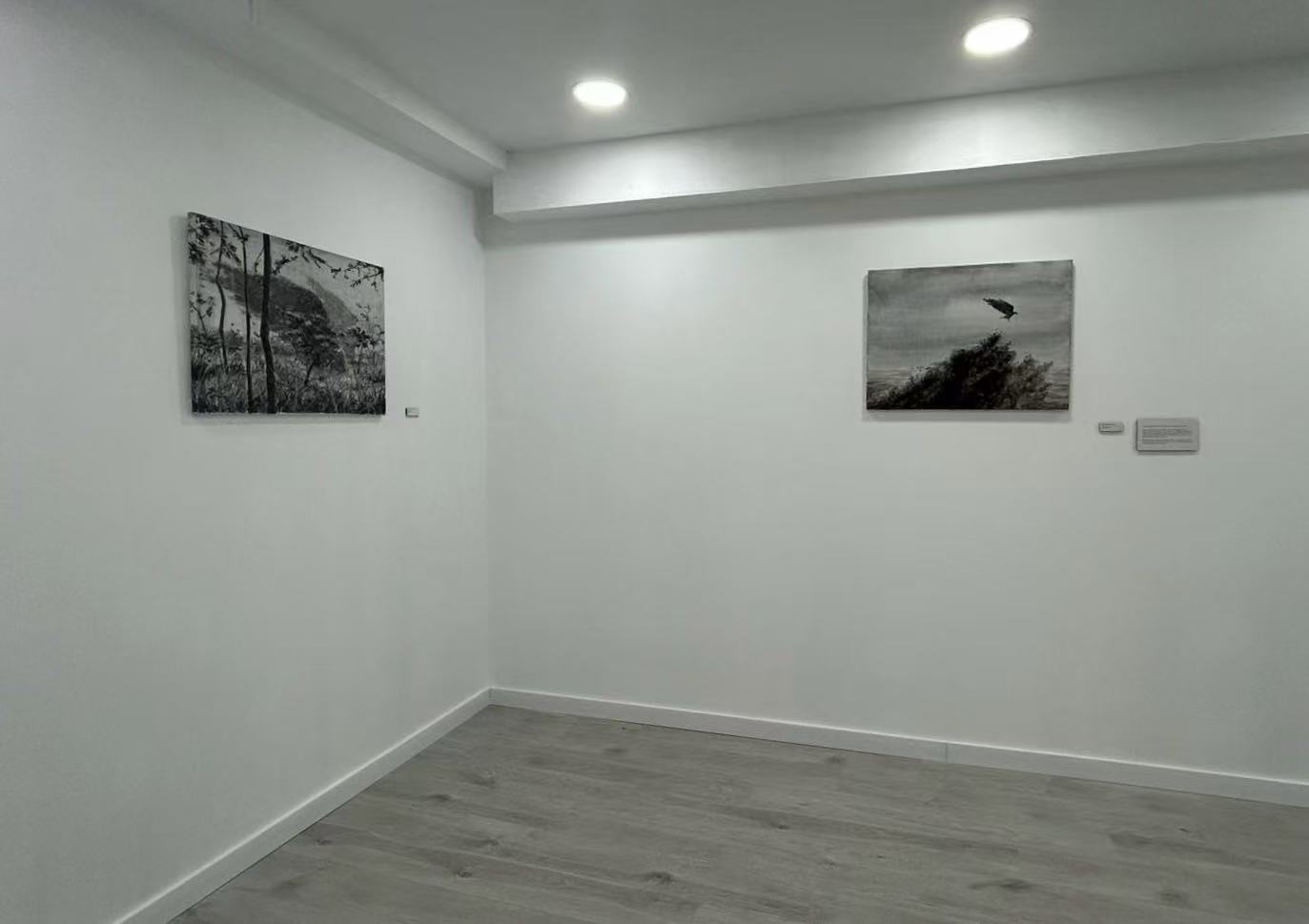
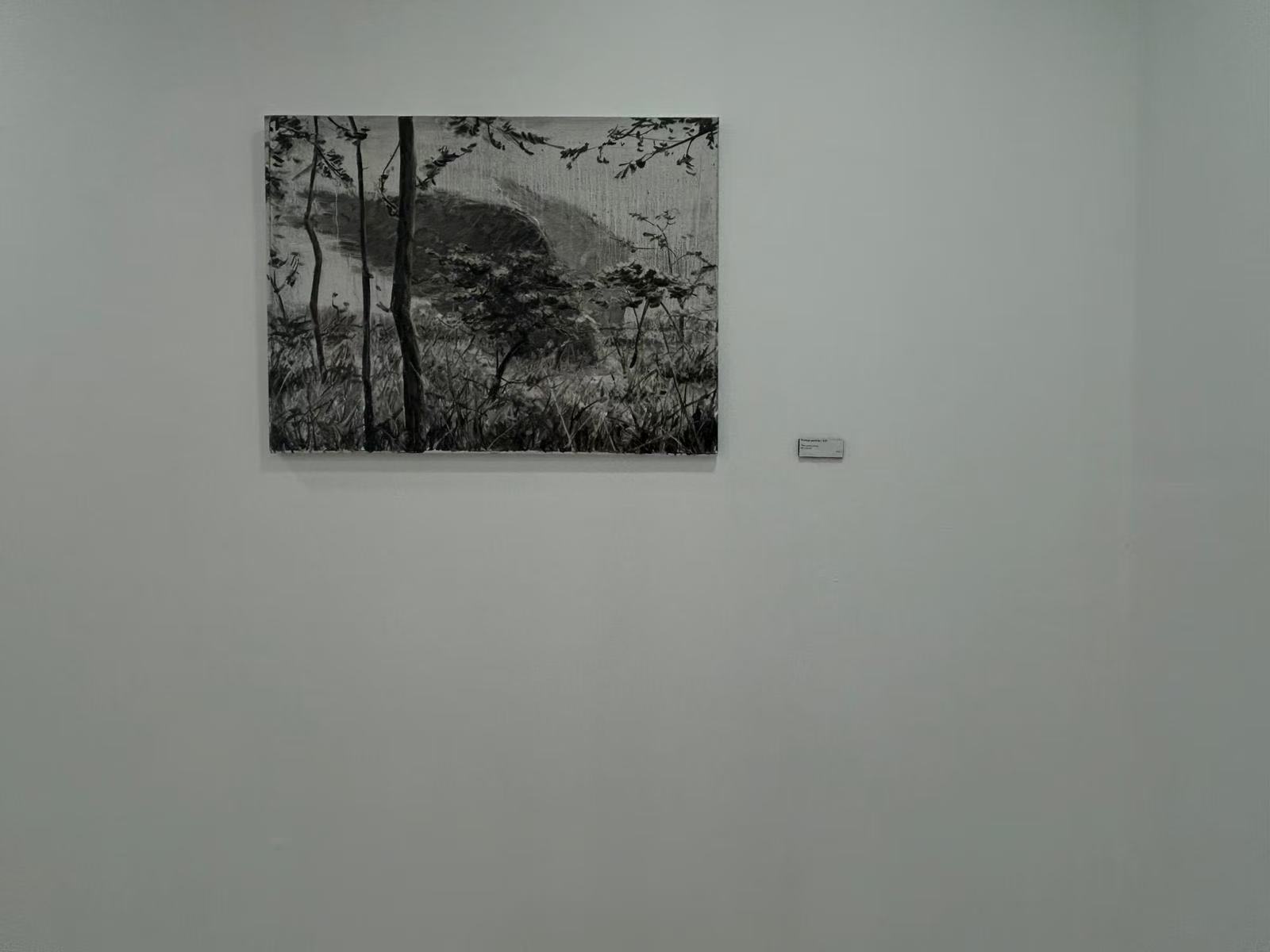
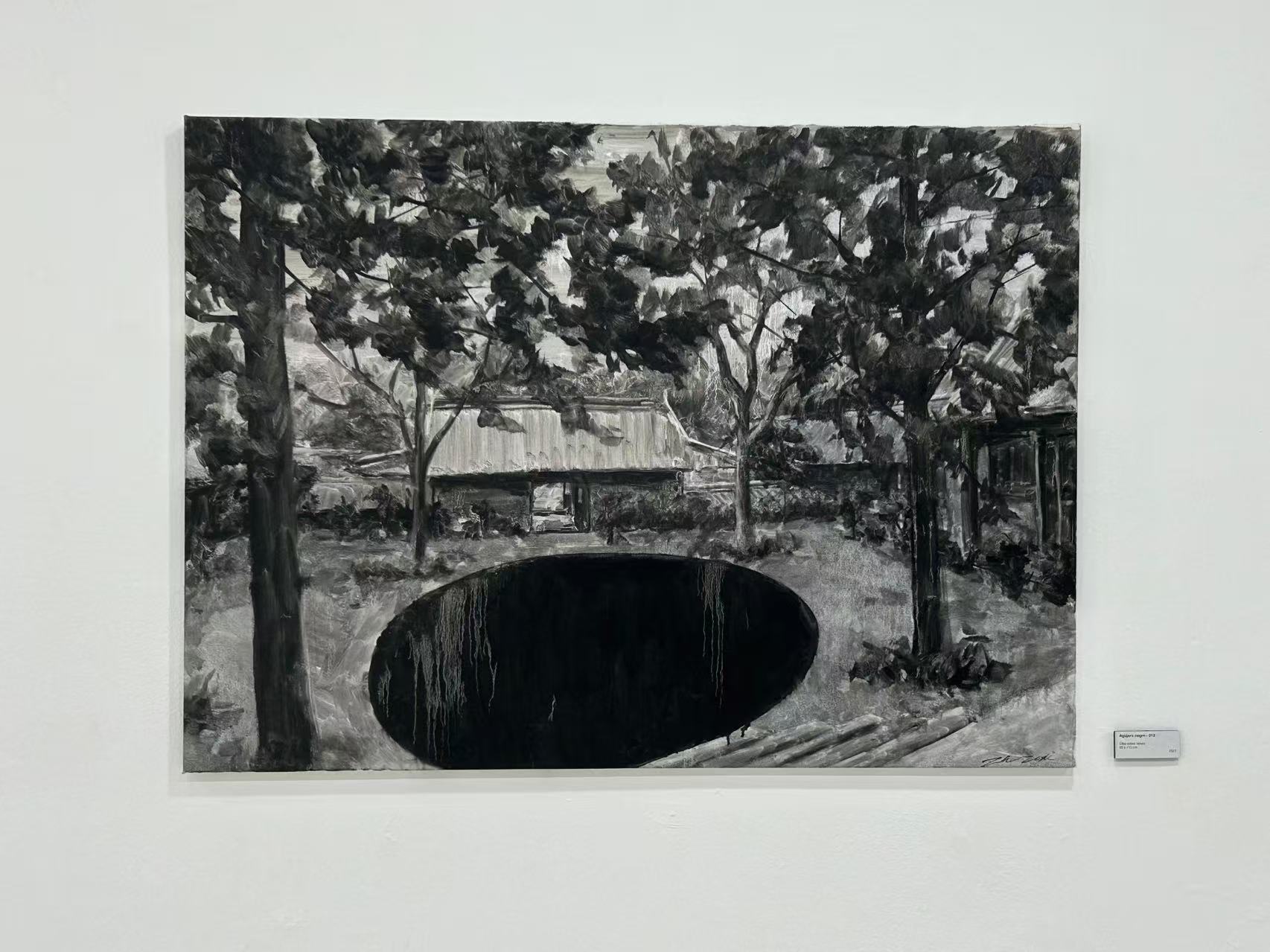
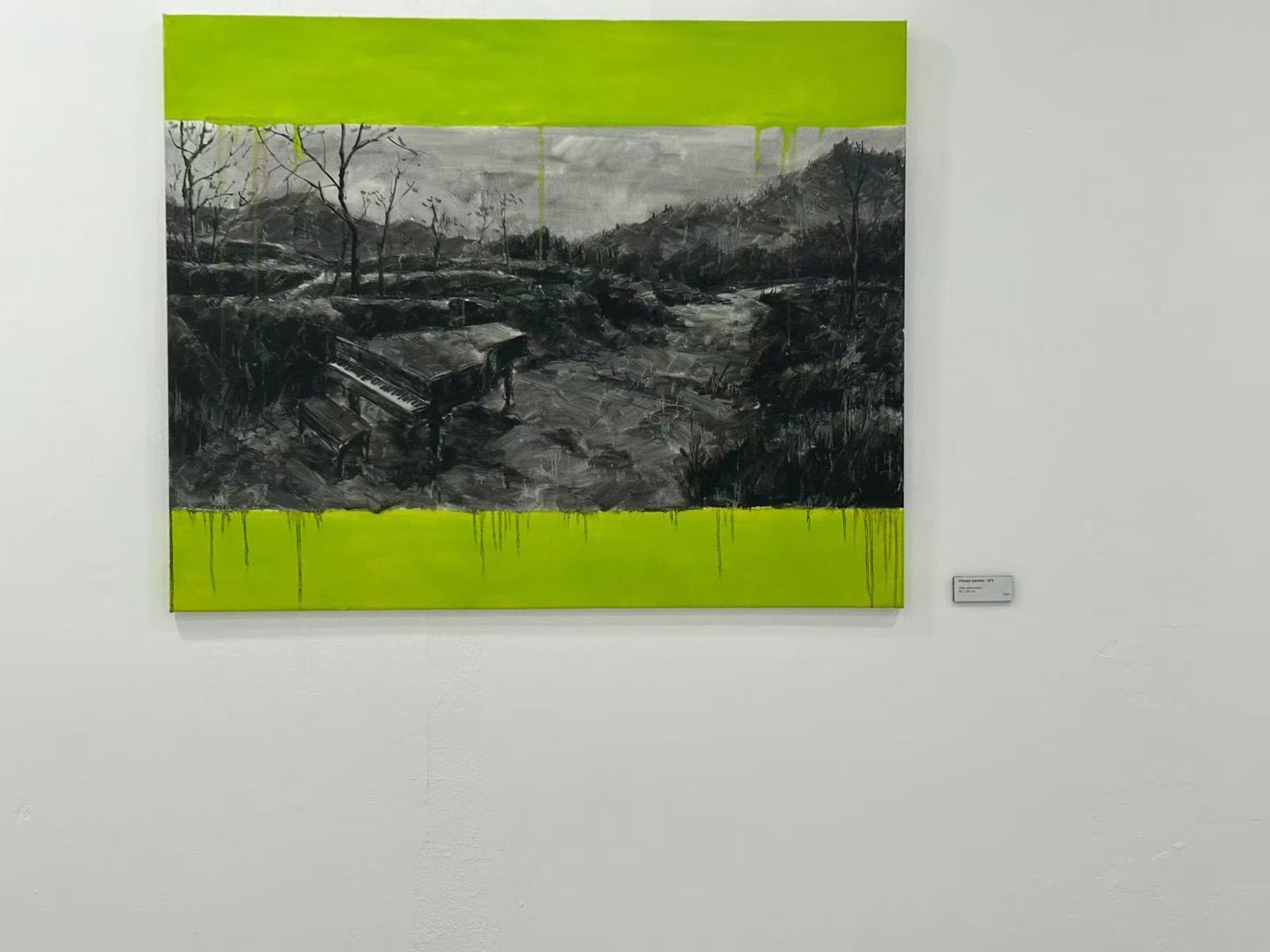
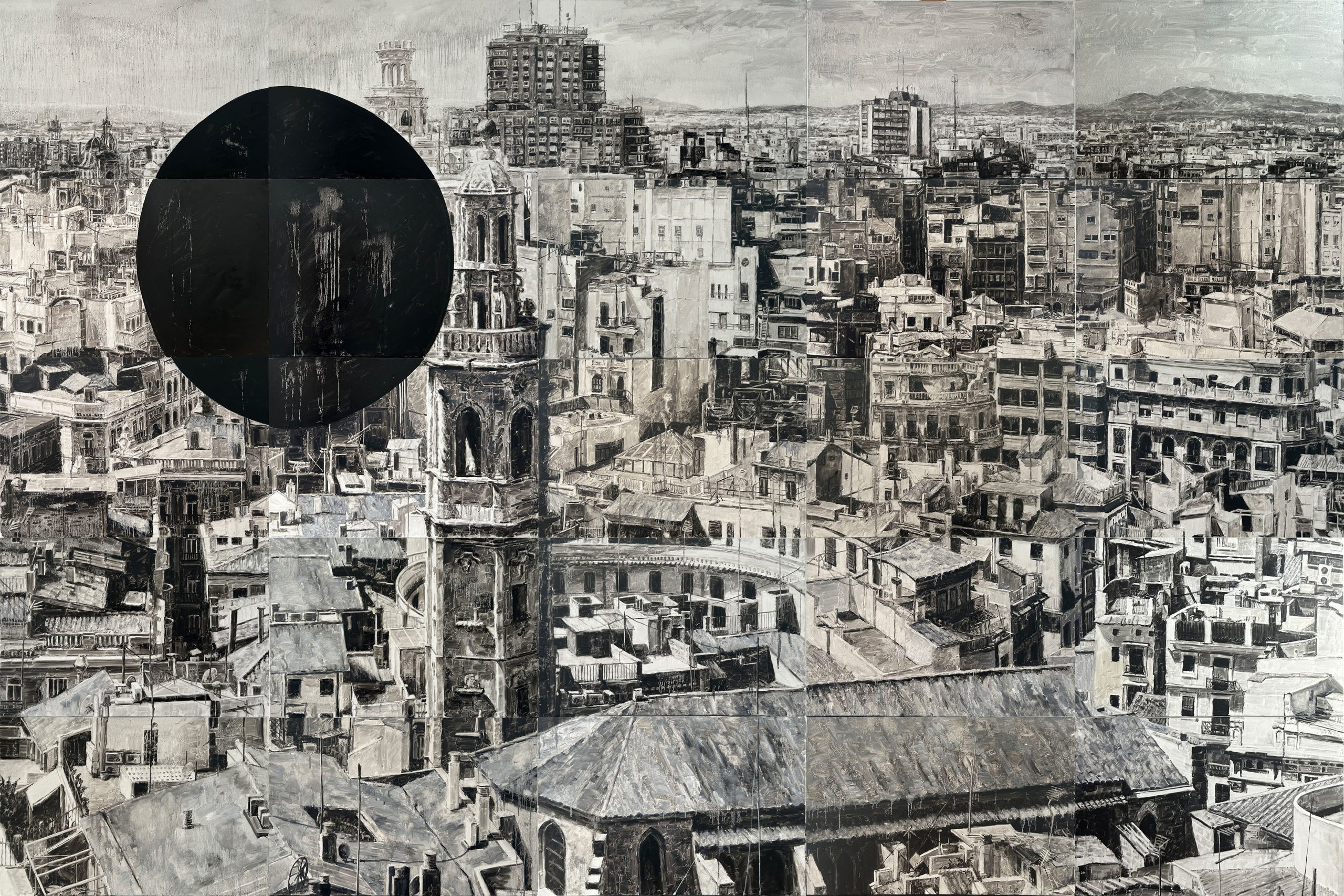
La serie “Agujero negro” (2020) presenta un círculo negro y denso que irrumpe en paisajes, generando múltiples interpretaciones: como mirada insondable al flotar o como abismo al posarse en el suelo. Este elemento minimalista crea una atmósfera de ciencia ficción y extrañeza. Dos obras destacadas, que muestran paisajes de Valencia y de China, utilizan pequeños lienzos ensamblados para acentuar la fragmentación y la inquietud.
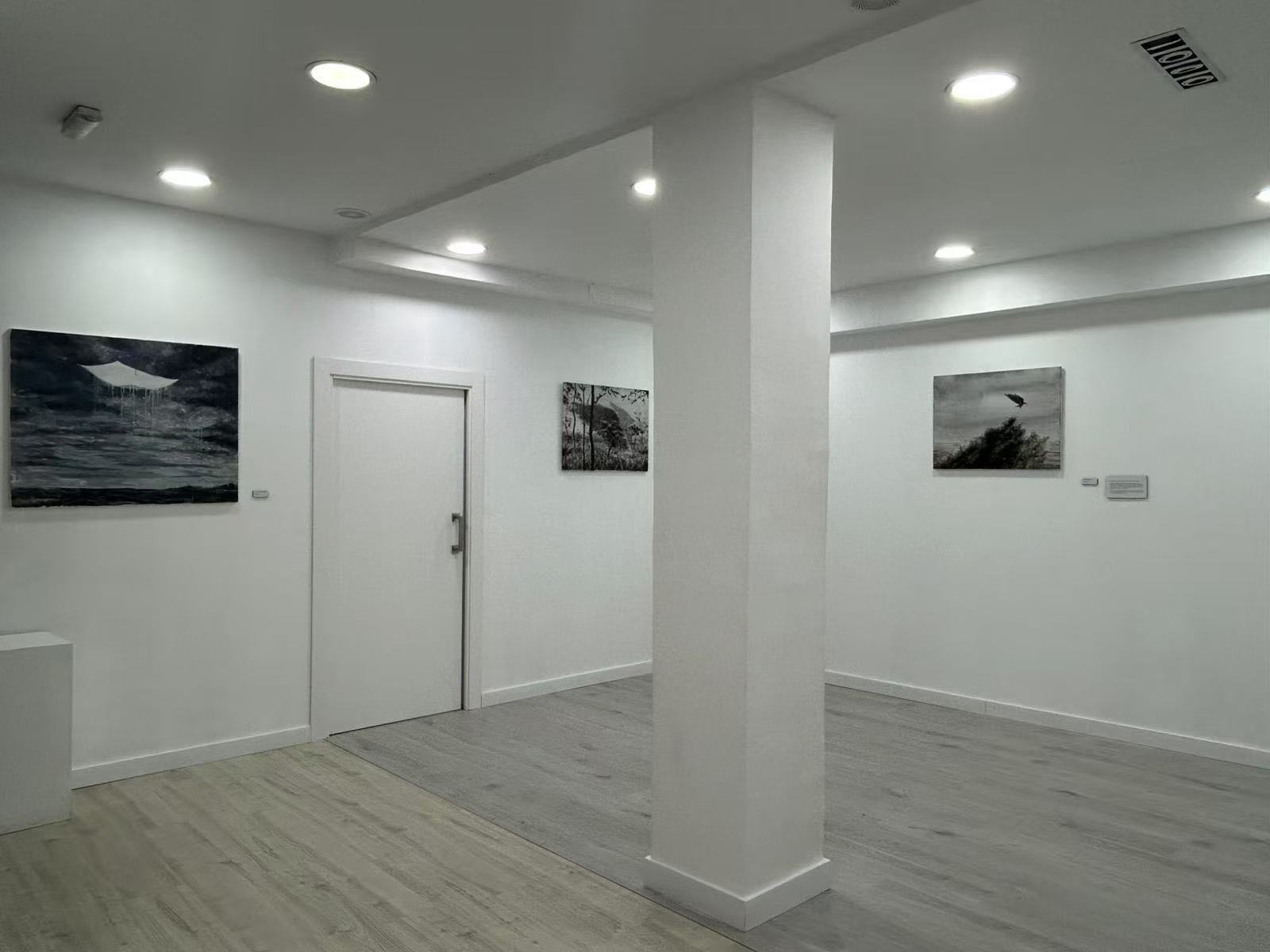
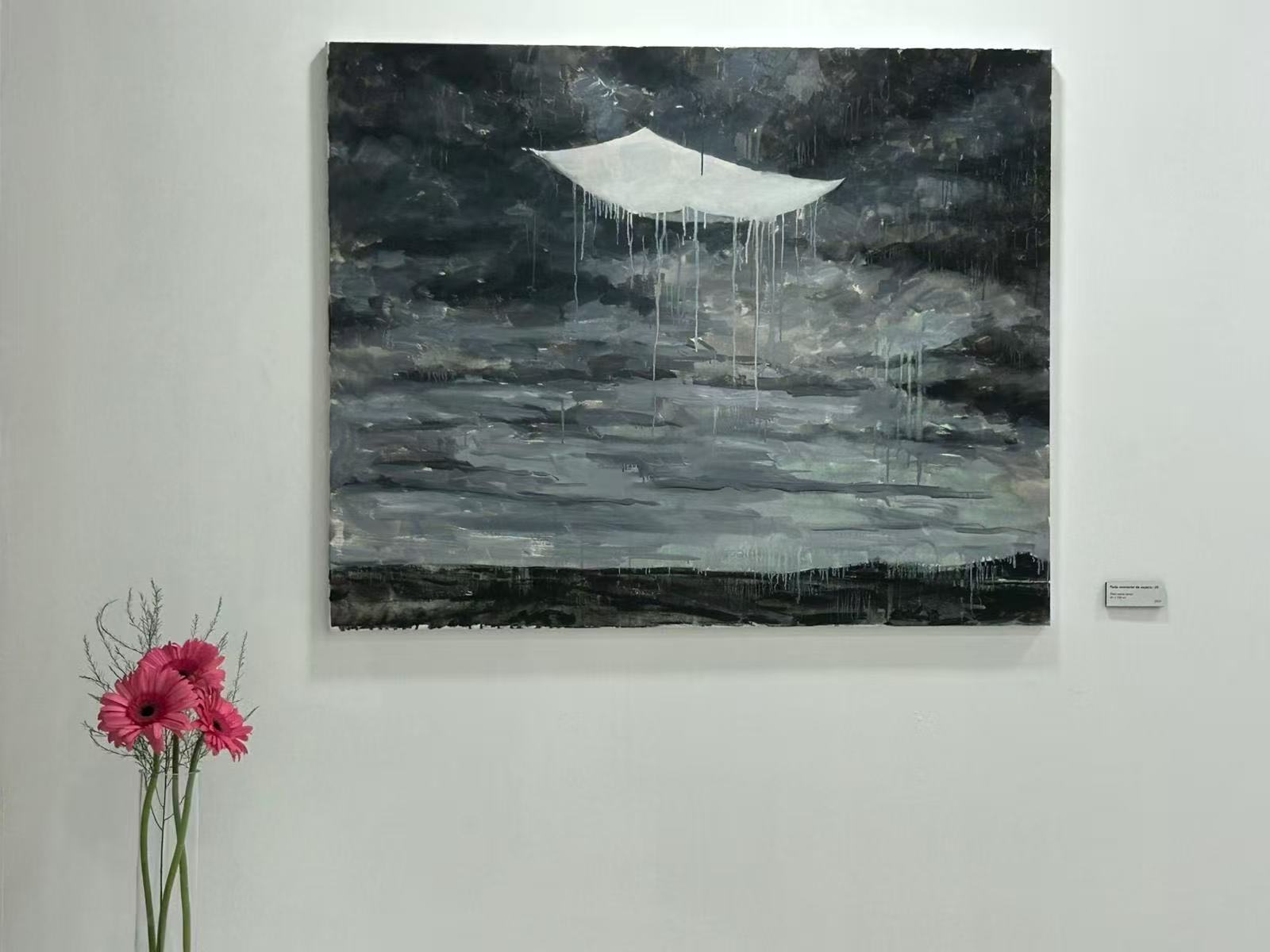
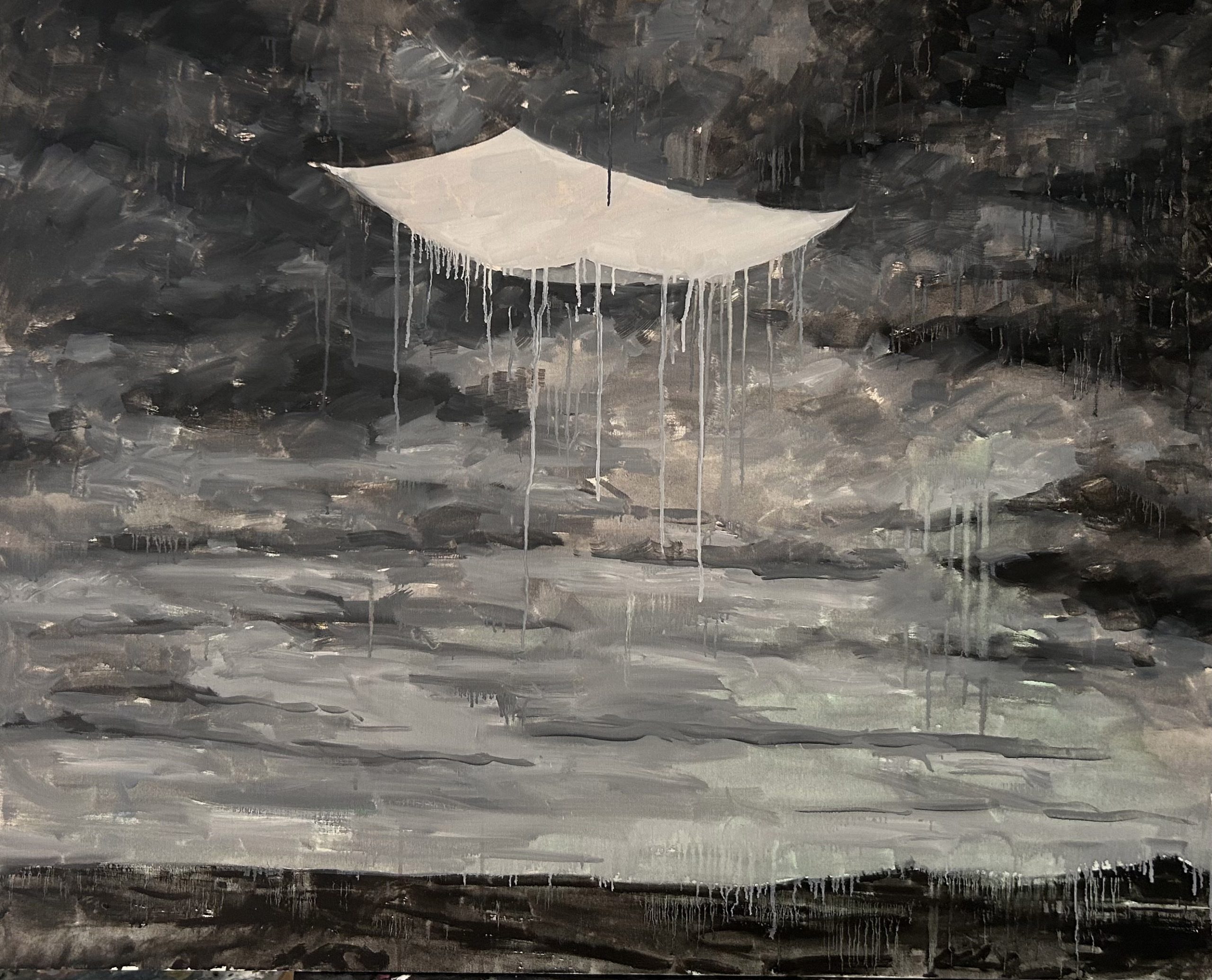
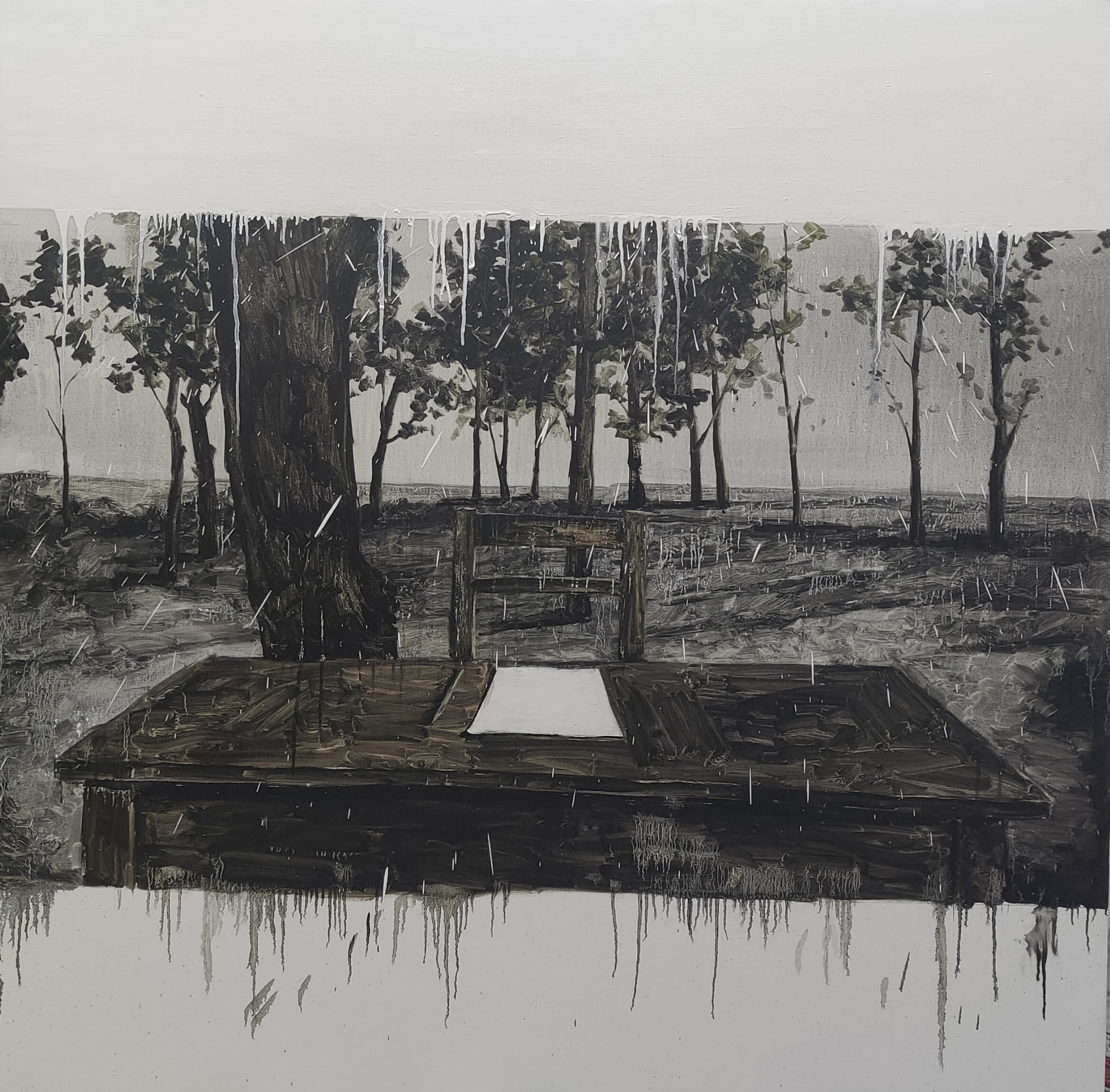
Paralelamente, la serie “Papel en blanco” también rechaza una lectura única: el papel y bolígrafo pueden simbolizar desde un interrogatorio hasta la introspección.El papel vacío suspendido sobre el mar, en diálogo con la obra “Leyenda – Jingwei”,representa un ciclo eterno de esfuerzo y resistencia frágil pero persistente. Ambas series comparten una poderosa ambigüedad simbólica.
Jingwei Filling the Sea
“Jingwei Filling the Sea” originates from an ancient Chinese myth. Jingwei was the youngest daughter of Emperor Yan. One day, while playing in the Eastern Sea, she accidentally drowned. Her soul transformed into a small bird, which, ever since, has tirelessly carried branches and stones to throw into the sea, hoping to fill it one day. This ancient legend, passed down for over two thousand years, is not merely a distant and tragic myth—it symbolizes the endless regeneration of life and the enduring vitality of culture.
The “Black Hole” series (2020) presents black, absorbing spaces that differ from conventional landscapes. The artist’s brushstrokes create a hazy sense of suspension and mystery, as if the picture itself were a deep, unfathomable abyss, a bottomless pit of the unconscious. The extreme contrast of black and white generates a strange, almost ritualistic spatial tension and a sense of detachment. These two tones—white reminiscent of Western modernist abstraction, and black recalling the dense ink fields of Chinese landscape painting—are juxtaposed through collaged fragments of numerous small canvases, intensifying the sense of rupture and instability.
In contrast, the “White Paper” series conveys a stark and minimalist visual impact. The single table and sheet of white paper become metaphors for introspection and confession, while the blank expanse evokes both the end and the beginning of creation. The circular “Jingwei” form thus becomes an allegory of endless repetition and futile struggle, hinting at both persistence and fragility. Together, the two series form a symbolic labyrinth filled with tension and contradiction.


.jpg)
-scaled.jpg)

100x80cm-2022副本-scaled.jpg)
副本-scaled.jpg)
副本-scaled.jpg)
副本-1-scaled.jpg)
.jpg)
.jpg)